0800 233 725 (toll-free)
 enquiries@online.tut.ac.za
%201.png?width=371&height=115&name=logo%20(1)%201.png)
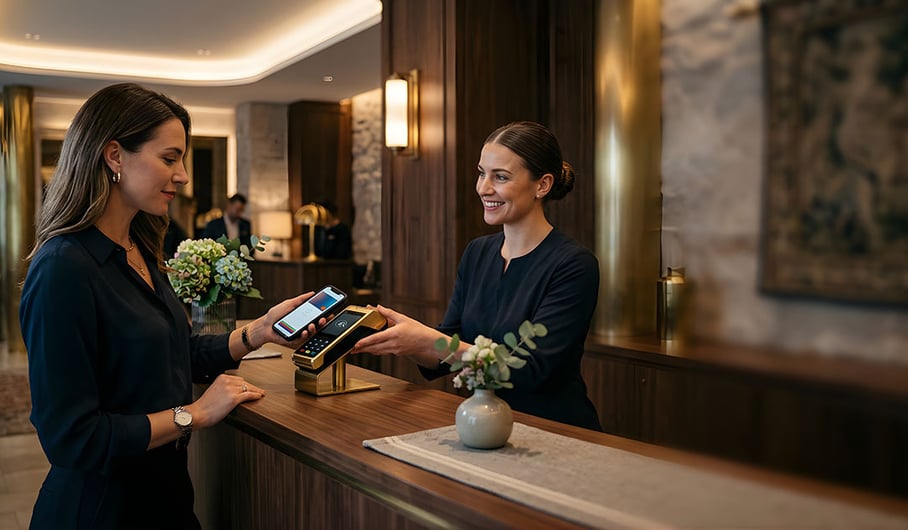
Hotels can measure their success by how closely a guest's actual experience comes to their expectations. To secure a competitive advantage, successful operators rely on Experience Management (XM), which is a systematic approach to capturing, analysing and acting upon feedback across every guest touchpoint.
Experience Management platforms, such as Qualtrics Hospitality and Medallia, enable organisations to move beyond traditional, periodic satisfaction surveys. These platforms provide a real-time pulse on guest sentiment, allowing management to identify service gaps, personalise guest interactions and build long-term hotel loyalty. However, technology is merely a facilitator. The true engine of an exceptional hospitality experience is a well-equipped workforce that can interpret this data and translate it into tangible service improvements, as has been championed by The Ritz-Carlton.
Article outline
- The Evolution of Guest Experience in Modern Hospitality
- Inside Qualtrics Hospitality: Core Features and Capabilities
- Operational Excellence and Strategy
- Foundational Operations and Service Excellence
- Strategic Management and Digital Fluency
- Leadership in a Global Context
- Driving Sustainable Growth in the African Market
- FAQs
FAQs
- 1. What is an Experience Management (XM) system in the context of hospitality?
- 2. How does Qualtrics Hospitality capture real-time guest feedback across multiple touchpoints?
- 3. How does Qualtrics leverage AI sentiment analysis to manage online guest reviews?
- 4. What is Location Experience Management, and how does it empower local property managers?
- 5. How do digital experience analytics within Qualtrics optimise hotel booking and mobile platforms?
Read more
This article is part of a larger series on the tourism and hospitality industry. To read more about this topic, you can click on any of the following article links.
- The Art and Science of Tourism Hospitality Management Systems
- South African Tourism: Trends, Growth and Career Opportunities
- Tourism Grading Council of South Africa: Star Grading Explained
- SATSA and Tourism Standards | South Africa's Sustainable Tourism
- FEDHASA: South Africa's Hospitality Leadership and Association
- SANParks and Conservation Tourism: South Africa's Wildlife Tourism
- Hospitality Tech in South Africa | Digital Trends and Smart Hotels
- Hotel PMS: Features, Benefits and Best Practices
- Mews PMS: Features, Benefits and Hotel Management Software
- Cloudbeds Hotel PMS | Simplifying Operations with Cloud Technology
- Front Office & Hotel Operations | Guest Services and Best Practices
- Contactless Digital Check-In | Enhance Guest Experience
- Housekeeping and Room Management Systems for Hotel Operations
- Hotel Maintenance and Preventive Management Systems
- Building Management Systems and Smart Hotel Facility Management
- Hotel Energy Management and Smart Solutions
- Guest Journey Mapping: Improving the Hotel Experience
- Hotel CRM: Guide to Customer Relationship Management
- Medallia | Transforming Hospitality Through Customer Experience
- Qualtrics Hospitality | Experience Management for Hotels and Resorts
- Hotel Loyalty Programmes | Guest Retention and Hospitality Rewards
- AI Personalisation in Hospitality | Enhancing Guest Experience
- Service Recovery Models in Hospitality | Guest Satisfaction
- Ritz-Carlton Service Recovery: Excellence in Hospitality
- Service Profit Chain: Boosting Hospitality Loyalty and Growth
- Hospitality Employee Experience | Retention and Service Excellence
- Hospitality Training and Staff Development Solutions
- Hospitality Education Pathways | Courses and Career Guide
- Ubuntu Hospitality Philosophy: African Excellence in Guest Service
- Four Seasons Golden Rule | Personalised Service and Experiences
- GSTC Hotel Criteria: Sustainable Standards and Best Practices
- ISO 14001 Hospitality | Environmental Management for Hotels
- Fair Trade Tourism | Ethical and Sustainable Tourism Guide
- HCMI Carbon Measurement | Hotel Carbon Footprint
- Green Globe Certification: Hospitality and Tourism Standards
- Regenerative Tourism | Restoring Communities, Nature and Travel
- Circular Hospitality | Circular Economy in Hotels and Tourism
- Hotel Carbon Tax | Compliance and Costs
The Evolution of Guest Experience in Modern Hospitality
The shift towards digital-first hospitality requires a new generation of leaders who possess both technical proficiency and operational expertise. Whether it is integrating feedback from Customer Relationship Management (CRM) systems or monitoring sentiment across digital channels, the ability to leverage data is a core competency for modern hospitality professionals.
Tshwane University of Technology (TUT) offers three online hospitality qualifications that are designed to equip hospitality professionals with the necessary skills to navigate this complex, data-rich environment. By grounding students in the theoretical and practical aspects of the industry, these programmes ensure that graduates are prepared to lead with strategic insight and operational agility.
Inside Qualtrics Hospitality: Core Features and Capabilities
Experience Management software relies on several integrated capabilities to capture human sentiment and turn it into intelligent action. As one of the leading Experience Management software providers, Qualtrics Hospitality XM includes the following features:
- Voice of Customer (VoC): Collects feedback at every critical touchpoint across digital channels, voice calls, chat interfaces and social media. This enables operators to measure what drives satisfaction and loyalty, share insights through role-based dashboards, and close the loop using proven service recovery models before at-risk guests walk away.
- Omnichannel Experience Management: Connects feedback and signals from surveys, direct calls, live chats and online reviews into a single, unified view. Automated text analytics can reveal what drives satisfaction or frustration, allowing teams to act on the full picture rather than isolated fragments.
- Location Experience Management: Provides frontline managers with a real-time view of what is happening at their specific property. By combining survey feedback, online reviews and closed-loop ticketing in one hub, local teams can address operational issues immediately.
- Digital Experience Analytics: Determine exactly where customers struggle on hotel booking sites and mobile applications. The system uses session replays, heatmaps and funnel analytics to identify these points of friction and quantify the business cost.
- Online Reputation Management and AI Sentiment Analysis: Monitors and responds to reviews across numerous external sites from one dashboard. Artificial intelligence is leveraged to generate AI personalised responses that make guests feel heard, while automated text analytics uncover sentiment shifts and underlying themes in unstructured feedback.
Operational Excellence and Strategy
Bridging the gap between sophisticated software like Qualtrics and day-to-day property management requires rigorous academic preparation. TUT offers specialised online programmes tailored to different stages of a hospitality career, integrating key modules that address operational and strategic challenges.
Foundational Operations and Service Excellence
At the operational level, managing the guest experience requires a deep understanding of service delivery and organisational behaviour. The Advanced Diploma in Hospitality Management provides the groundwork for this, featuring core modules such as:
- Service Excellence: Equips students with behavioural knowledge regarding how people act within an organisation, fostering skills to handle a fast-changing business environment.
- Hospitality Management IV: Explores financial awareness, control and strategic planning within hospitality units to determine project feasibility and investment success.
- Hospitality Industry Law: Covers critical legal frameworks, including food hygiene legislation, occupational health and safety and consumer protection regulations.
Strategic Management and Digital Fluency
As hospitality organisations mature, the focus shifts from daily operations to broader market positioning and digital transformation. The Postgraduate Diploma in Hospitality Management is designed for professionals looking to sharpen their strategic acumen. Relevant modules include:
- Digital Hospitality Marketing: Explores critical digital marketing trends, teaching students how to analyse digital channels and select appropriate pathways to become innovative and competitive in the hospitality sector.
- Operations Management: Focuses on the planning, coordination and control of transforming resources to deliver exceptional products and services.
- Corporate Social Responsibility (CSR): Examines the social, ecological and environmental obligations of hospitality organisations, ensuring businesses remain accountable to their communities.
- Organisational Behaviour: Provides insight into human behaviour, internal structures and technology systems that influence organisational effectiveness.
Leadership in a Global Context
For senior professionals seeking to influence the industry at an executive level, leadership becomes the defining factor. The Master of Tourism and Hospitality Leadership prepares students to navigate the complexities of a global industry through advanced academic inquiry. Key modules include:
- Service Leadership: Engages with positive leadership styles, such as transformational leadership, to build a service climate that shapes employee perceptions and enhances customer outcomes.
- Advanced Tourism and Hospitality Marketing: Encourages students to engage with advanced marketing theories, disruptive technologies, and emerging niche markets to solve complex industry problems.
- Strategic Financial Management for Tourism and Hospitality: Builds financial literacy, focusing on revenue and yield management principles essential for high-level business leadership.
- Critical Issues in Human Resources Leadership: Explores contemporary management of human capital to uplift employee morale and maximise performance, which research shows directly influences service quality and customer retention.
Driving Sustainable Growth in the African Market
As the African tourism sector continues to expand, integrating advanced technology and human-centric leadership will define tomorrow's market leaders. Tools like Qualtrics provide data on guest sentiment, but academic programmes like those offered by TUT provide the skills to know what to do with it, including the critical thinking, strategic planning, and leadership capacity required to drive meaningful change.
Whether pursuing an Advanced Diploma, a Postgraduate Diploma, or a Masters degree, professionals who invest in their education are better equipped to turn guest data into lasting brand loyalty, ensuring the long-term success of their organisations.
FAQs: Experience Management
1. What is an Experience Management (XM) system in the context of hospitality?
An Experience Management (XM) system is an integrated software platform that goes beyond traditional, periodic customer satisfaction surveys. In hospitality, an XM system continuously gathers operational and human sentiment data across every guest touchpoint throughout the guest journey, enabling hotels to measure, analyse and systematically improve the overall guest experience.
2. How does Qualtrics Hospitality capture real-time guest feedback across multiple touchpoints?
Qualtrics Hospitality does this through a Voice of Customer (VoC) framework alongside omnichannel capabilities. It aggregates feedback signals from digital surveys, direct phone calls, live chat interfaces and social media interactions into a single, unified view. This allows hotel operators to identify issues immediately and close the loop with guests before they leave the property.
3. How does Qualtrics leverage AI sentiment analysis to manage online guest reviews?
Qualtrics employs advanced artificial intelligence and automated text analytics to process unstructured feedback from external review sites and social channels. The system automatically detects sentiment shifts, reveals underlying themes in guest comments and helps management track reputation trends while generating informed responses to feedback.
4. What is Location Experience Management, and how does it empower local property managers?
Location Experience Management is a specific feature set within platforms like Qualtrics that provides frontline managers with a real-time operational dashboard for a specific hotel or resort. By combining direct survey metrics, online reviews and automated closed-loop ticketing into one hub, local teams can assign tasks, resolve maintenance or service issues instantly, and track accountability at the property level.
5. How do digital experience analytics within Qualtrics optimise hotel booking and mobile platforms?
Digital experience analytics track how users navigate a hotel's digital ecosystem by using tools such as session replays, heatmaps and funnel analytics. This enables hospitality brands to pinpoint the exact moments where digital friction occurs on booking sites or mobile applications, quantify financial losses, and guide web developers in streamlining the online reservation process.