0800 233 725 (toll-free)
 enquiries@online.tut.ac.za
%201.png?width=371&height=115&name=logo%20(1)%201.png)
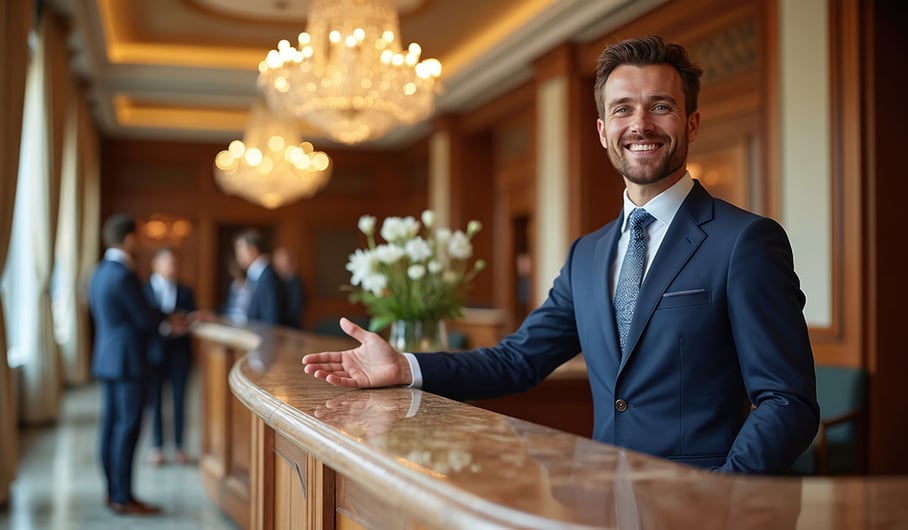
The hospitality industry has long been defined by the "human touch". This comes from the warm greeting at reception, the attentive service in the dining hall and the anticipation of guest needs. However, the modern tourism landscape is undergoing a profound shift and delivering exceptional service requires more than just intuition. The most successful hotels now combine the human element of high-touch service with high-tech intelligence. This is where platforms like Medallia, an industry leader in experience management, are reshaping the sector.
FAQs
- 1. How do hospitality management programmes incorporate new technologies like AI and data analytics?
- 2. Why is experience management important in the South African hospitality context?
- 3. Do I need a technical background to succeed in these online programmes?
- 4. How can a Postgraduate Diploma in Hospitality Management help me advance my career?
- 5. Can the Master of Tourism and Hospitality Leadership help me become a more effective leader?
Read more
This article is part of a larger series on the tourism and hospitality industry. To read more about this topic, you can click on any of the following article links.
- The Art and Science of Tourism Hospitality Management Systems
- South African Tourism: Trends, Growth and Career Opportunities
- Tourism Grading Council of South Africa: Star Grading Explained
- SATSA and Tourism Standards | South Africa's Sustainable Tourism
- FEDHASA: South Africa's Hospitality Leadership and Association
- SANParks and Conservation Tourism: South Africa's Wildlife Tourism
- Hospitality Tech in South Africa | Digital Trends and Smart Hotels
- Hotel PMS: Features, Benefits and Best Practices
- Mews PMS: Features, Benefits and Hotel Management Software
- Cloudbeds Hotel PMS | Simplifying Operations with Cloud Technology
- Front Office & Hotel Operations | Guest Services and Best Practices
- Contactless Digital Check-In | Enhance Guest Experience
- Housekeeping and Room Management Systems for Hotel Operations
- Hotel Maintenance and Preventive Management Systems
- Building Management Systems and Smart Hotel Facility Management
- Hotel Energy Management and Smart Solutions
- Guest Journey Mapping: Improving the Hotel Experience
- Hotel CRM: Guide to Customer Relationship Management
- Medallia | Transforming Hospitality Through Customer Experience
- Qualtrics Hospitality | Experience Management for Hotels and Resorts
- Hotel Loyalty Programmes | Guest Retention and Hospitality Rewards
- AI Personalisation in Hospitality | Enhancing Guest Experience
- Service Recovery Models in Hospitality | Guest Satisfaction
- Ritz-Carlton Service Recovery: Excellence in Hospitality
- Service Profit Chain: Boosting Hospitality Loyalty and Growth
- Hospitality Employee Experience | Retention and Service Excellence
- Hospitality Training and Staff Development Solutions
- Hospitality Education Pathways | Courses and Career Guide
- Ubuntu Hospitality Philosophy: African Excellence in Guest Service
- Four Seasons Golden Rule | Personalised Service and Experiences
- GSTC Hotel Criteria: Sustainable Standards and Best Practices
- ISO 14001 Hospitality | Environmental Management for Hotels
- Fair Trade Tourism | Ethical and Sustainable Tourism Guide
- HCMI Carbon Measurement | Hotel Carbon Footprint
- Green Globe Certification: Hospitality and Tourism Standards
- Regenerative Tourism | Restoring Communities, Nature and Travel
- Circular Hospitality | Circular Economy in Hotels and Tourism
- Hotel Carbon Tax | Compliance and Costs
The New Era of Guest Experience
Medallia and similar experience management platforms like Qualtrics Hospitality serve as the "central nervous system" of a modern hospitality business. By collecting real-time feedback across every channel, from mobile app interactions and social media mentions to direct surveys, these platforms provide a 360-degree view of the guest journey.
In a competitive market, data is the key to differentiation. AI-driven sentiment analysis and AI personalisation allows managers to move beyond superficial metrics, identifying exactly why a guest felt dissatisfied or, conversely, what specific action delighted them. This allows for proactive service recovery and the personalisation of stays that turn first-time visitors into brand advocates enrolled in your hotel loyalty programme.
As proven by recent research in the local hospitality industry, digital transformation is a fundamental driver of both competitiveness and sustainability. The authors of the 2024 study concluded that digital technologies make hospitality establishments more competitive by helping them to improve customer experiences, increase operational efficiency, make data-driven decisions and adapt to market changes.
Decoding the Medallia Platform: Core Features and Mechanics
Integrated seamlessly with a hotel CRM, Medallia serves as the digital "central nervous system" of a modern hospitality business, capturing billions of signals from across the entire guest ecosystem. By moving beyond traditional, lagging feedback methods, Medallia equips organisations to transition from reactive troubleshooting to proactive experience orchestration.
The platform achieves this through a comprehensive suite of features:
- Guest Surveys and Omnichannel Feedback: Medallia captures solicited and unsolicited feedback across every touchpoint. Whether a guest shares an opinion via mobile app interactions, email follow-ups, social media mentions, or direct point-of-sale surveys, all communication channels are unified into a single stream.
- Sentiment Analysis and AI Insights: Using advanced artificial intelligence, the platform analyses natural language text from comments and reviews. It moves beyond superficial numerical ratings to uncover why a guest felt dissatisfied or delighted, highlighting emerging themes and critical sentiment shifts.
- Customer Journey Analytics: The platform maps the complete guest lifecycle, tracking interactions from the initial booking stage through to post-stay reviews. This holistic visibility allows managers to pinpoint exact friction points in the service journey.
- Service Recovery and Real-Time Alerts: When negative feedback or service failures are flagged, Medallia automatically triggers real-time alerts to frontline staff and managers. This enables rapid, proactive service recovery, resolving issues before a guest even reaches the front desk or leaves a public review.
- Operational Reporting and Role-Based Dashboards: Customised dashboards deliver actionable data tailored to specific organisational roles, ensuring that everyone from frontline team members to the executive suite has the clarity needed to make data-driven decisions.
- Employee Engagement: Recognising that exceptional guest experiences start with motivated staff, the platform includes employee listening tools to measure workforce sentiment, uncover training opportunities, and align internal culture with external brand promises.
Bridging the Gap: Education and Industry Innovation
Current and aspiring hospitality leaders should understand how to leverage these technological tools. The online hospitality programmes taught by Tshwane University of Technology (TUT) are designed to bridge the gap between traditional hospitality management and these modern, technology-driven demands.
Strategic Operations and Service Excellence
At the heart of the Advanced Diploma in Hospitality Management, the Service Excellence module provides the behavioural foundation required to manage people within an organisation. While software like Medallia can identify a trend, it is the skilled manager who must interpret that data and foster a culture of service that empowers employees to act, much like the approach pioneered by The Ritz-Carlton.
This is complemented by the Postgraduate Diploma in Hospitality Management, which elevates the focus to strategic management. The Operations Management module is particularly relevant here; it trains students to coordinate and control resources effectively. When students understand the theory of operations, they are better equipped to integrate the operational reporting features of platforms like Medallia to streamline their business processes, reduce waste, and improve service delivery.
Data-Driven Marketing and Leadership
In the digital age, marketing is intrinsically linked to data. The Digital Hospitality Marketing module within the Postgraduate Diploma in Hospitality Management allows students to engage with critical digital trends, analysing how platforms can be used to become more competitive.
For those at the executive level, the Master of Tourism and Hospitality Leadership offers the most advanced integration of these concepts. In the Advanced Tourism and Hospitality Marketing module, students move beyond basic marketing to apply techniques and technologies to solve complex industry problems. The Service Leadership module encourages students to master the skills needed to build a service climate that shapes employee perceptions. This is crucial for leaders who want to use data, not as a tool for surveillance, but as a mechanism to create an atmosphere where staff perform with intent and focus.
The Future of the Industry
The integration of experience management platforms is an inevitability for any hospitality business aiming for growth. However, technology is a tool, not a replacement for leadership. The future belongs to professionals who can marry the analytical power of AI with the irreplaceable human capacity for empathy and innovation.
By grounding themselves in these academic programmes, students are not just learning management theory; they are preparing to lead in a fast-paced, digitally-integrated global industry. Whether it is through the strategic focus of the Master of Tourism and Hospitality Leadership or the operational rigour of the Advanced Diploma in Hospitality Management, these programmes provide the tools to navigate the evolving hospitality landscape with confidence.
FAQs
1. How do hospitality management programmes incorporate new technologies like AI and data analytics?
TUT’s online programmes incorporate technology through specific modules that focus on the intersection of management and modern tools. For example, the Digital Hospitality Marketing module (in the Postgraduate Diploma) and Advanced Tourism and Hospitality Marketing (in the Masters programme) require students to engage with current industry trends, disruptive technologies and data-driven marketing strategies to ensure their organisations remain competitive.
2. Why is experience management important in the South African hospitality context?
The South African hospitality sector is highly competitive and operates in a global market where guest expectations are shaped by international standards. Research into the local hospitality market, published by the International Journal of Modern Hospitality and Tourism, found that digitalisation is essential for enhancing competitiveness, improving operational efficiency and securing long-term sustainability. Experience management allows businesses to understand these local and international guest needs better, enabling them to improve service delivery and create more meaningful, personalised guest experiences.
3. Do I need a technical background to succeed in these online programmes?
No, you do not need a background in computer science. However, you must be computer literate. The programmes are designed for professionals who need to understand how to apply technology (such as management software and digital marketing tools) within a business context. You will be learning the management theory and strategic application of these tools, rather than how to code or build them.
4. How can a Postgraduate Diploma in Hospitality Management help me advance my career?
The Postgraduate Diploma in Hospitality Management qualification focuses on strategic oversight rather than just operational tasks. By covering modules like Strategic Management, Human Resource Management, and Digital Hospitality Marketing, you are equipped with the skills to transition from a frontline role into senior management.
5. Can the Master of Tourism and Hospitality Leadership help me become a more effective leader?
Yes, the Master of Tourism and Hospitality Leadership programme is specifically designed to develop leadership capabilities. Modules like Service Leadership and Tourism and Hospitality Business Leadership focus on self-reflection, ethical leadership and the ability to foster high-performing teams. This programme prepares you to influence industry growth, lead change and tackle complex challenges, making it ideal for professionals aiming for executive-level positions in tourism and hospitality.