0800 233 725 (toll-free)
 enquiries@online.tut.ac.za
%201.png?width=371&height=115&name=logo%20(1)%201.png)
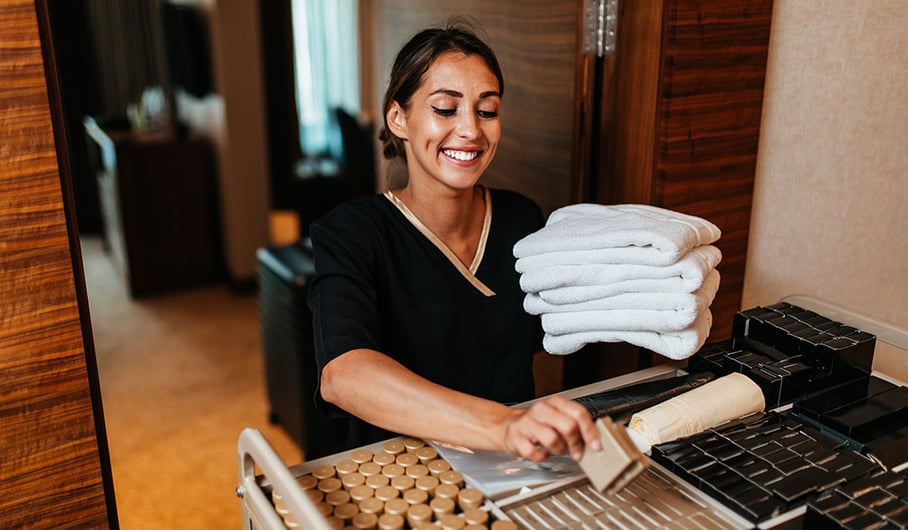
The housekeeping department is often the unsung hero of operational success in the hospitality sector. While marketing and front-office interactions provide the initial draw for guests, the physical environment is what ultimately secures guest loyalty and drives positive reviews.
Modern hospitality management has evolved into a sophisticated discipline that relies heavily on the integration of Housekeeping Management Systems (HMS) and Property Management Systems (PMS). These digital frameworks facilitate real-time communication, inventory control and maintenance scheduling, ensuring that the back-of-house operations are as efficient and data-driven as the front-of-house guest experience.
For hospitality professionals aiming to master these operational complexities, the online programmes offered by the Tshwane University of Technology (TUT) provide the theoretical and practical foundation required to lead in this demanding field.
FAQs
- 1. Why is the integration of a Property Management System (PMS) important for housekeeping?
- 2. How does the Advanced Diploma in Hospitality Management assist in operational roles?
- 3. What skills are developed in the Master of Tourism and Hospitality Leadership for operational directors?
- 4. Can formal education help with the "soft" side of housekeeping management?
- 5. How does the TUT online model benefit working professionals?
Read more
This article is part of a larger series on the tourism and hospitality industry. To read more about this topic, you can click on any of the following article links.
- The Art and Science of Tourism Hospitality Management Systems
- South African Tourism: Trends, Growth and Career Opportunities
- Tourism Grading Council of South Africa: Star Grading Explained
- SATSA and Tourism Standards | South Africa's Sustainable Tourism
- FEDHASA: South Africa's Hospitality Leadership and Association
- SANParks and Conservation Tourism: South Africa's Wildlife Tourism
- Hospitality Tech in South Africa | Digital Trends and Smart Hotels
- Hotel PMS: Features, Benefits and Best Practices
- Mews PMS: Features, Benefits and Hotel Management Software
- Cloudbeds Hotel PMS | Simplifying Operations with Cloud Technology
- Front Office & Hotel Operations | Guest Services and Best Practices
- Contactless Digital Check-In | Enhance Guest Experience
- Housekeeping and Room Management Systems for Hotel Operations
- Hotel Maintenance and Preventive Management Systems
- Building Management Systems and Smart Hotel Facility Management
- Hotel Energy Management and Smart Solutions
- Guest Journey Mapping: Improving the Hotel Experience
- Hotel CRM: Guide to Customer Relationship Management
- Medallia | Transforming Hospitality Through Customer Experience
- Qualtrics Hospitality | Experience Management for Hotels and Resorts
- Hotel Loyalty Programmes | Guest Retention and Hospitality Rewards
- AI Personalisation in Hospitality | Enhancing Guest Experience
- Service Recovery Models in Hospitality | Guest Satisfaction
- Ritz-Carlton Service Recovery: Excellence in Hospitality
- Service Profit Chain: Boosting Hospitality Loyalty and Growth
- Hospitality Employee Experience | Retention and Service Excellence
- Hospitality Training and Staff Development Solutions
- Hospitality Education Pathways | Courses and Career Guide
- Ubuntu Hospitality Philosophy: African Excellence in Guest Service
- Four Seasons Golden Rule | Personalised Service and Experiences
- GSTC Hotel Criteria: Sustainable Standards and Best Practices
- ISO 14001 Hospitality | Environmental Management for Hotels
- Fair Trade Tourism | Ethical and Sustainable Tourism Guide
- HCMI Carbon Measurement | Hotel Carbon Footprint
- Green Globe Certification: Hospitality and Tourism Standards
- Regenerative Tourism | Restoring Communities, Nature and Travel
- Circular Hospitality | Circular Economy in Hotels and Tourism
- Hotel Carbon Tax | Compliance and Costs
Why Housekeeping Matters
Housekeeping is frequently the largest department in a hotel, representing a significant portion of operational costs. Research has shown that cleanliness is the most important factor for prospective guests when deciding where to stay. In an era where online ratings can make or break an establishment, even a minor lapse in room standards can lead to negative feedback, which in turn deters future bookings.
Effective housekeeping operations go beyond sanitation. They encompass resource management, staff scheduling, health and safety compliance, and the swift reporting of maintenance issues. When these processes are manual or fragmented, the risk of human error increases, leading to delayed check-ins, frustrated guests and decreased staff morale.
Integrating technology into the process solves this problem. By using modern HMS and PMS solutions, properties can:
- Automate Task Assignments: Digital systems can automatically assign room-cleaning tasks based on real-time checkout data, while some systems use advanced AI-powered housekeeping scheduling.
- Facilitate Cross-Departmental Communication: Instant alerts between housekeeping and the front desk regarding room status reduce wait times.
- Streamline Maintenance Reporting: Housekeeping staff can instantly log maintenance issues (such as a dripping tap or a faulty light) via mobile devices, triggering an automated work order for the engineering team.
- Optimise Inventory: Real-time tracking of linens, toiletries and cleaning supplies prevents stock-outs and reduces waste to better control costs.
Advancing Operational Expertise through Education
To implement and manage these systems effectively, hospitality leaders require a deep understanding of both technology and strategic operations. TUT’s online Advanced Diploma in Hospitality Management is designed to build this operational foundation.
Modules such as Accommodation Management IV are particularly relevant for those seeking to refine their expertise in this area. This module focuses on managing the guest experience through the application of hospitality principles, teaching students how to balance operational efficiency with the environmental and physical requirements of maintaining a world-class facility. Additionally, the Service Excellence module provides critical behavioural knowledge, helping managers understand how to lead teams in a high-pressure, service-oriented environment.
Strategic Oversight and Leadership
As professionals move from operational roles into management, the challenge shifts from doing the job to managing the system. TUT’s online Postgraduate Diploma in Hospitality Management is designed for those looking to thrive in the global industry.
This programme delves into:
- Organisational Behaviour: Essential for managing diverse housekeeping teams and fostering a culture of high performance.
- Strategic Management: Teaching leaders how to align housekeeping operations with the broader business objectives, ensuring that every operational decision contributes to the hotel’s profitability and brand reputation.
For those at the executive level, TUT’s online Master of Tourism and Hospitality Leadership offers the highest level of academic preparation. This programme is designed to equip leaders with the skills to address broader market complexities. Its curriculum includes specialised elective modules such as the Planning (Health and Safety) Food and Accommodation module, which is vital for leaders overseeing the compliance and safety protocols that are central to housekeeping and facility management. By bridging the gap between theoretical business science and applied industry intervention, graduates of this masters programme are prepared to lead entire operations, influence policy and drive sustainable innovation within the hospitality sector.
The Future of Hospitality Management
The integration of digital systems into hotel operations is an ongoing evolution, not a one-time upgrade. As research into hospitality technology highlights, the ability to pivot from manual, time-consuming tasks to streamlined, data-driven workflows is the hallmark of a successful enterprise. For the modern hospitality professional, success lies in understanding that while technology provides the tools, it is the strategic leadership, operational foresight and commitment to service excellence that truly drive results.
FAQs
1. Why is the integration of a Property Management System (PMS) important for housekeeping?
A PMS serves as the central hub for hotel operations. By integrating it with a housekeeping management system, the hotel ensures that front-office data, such as check-out times and new room bookings, is instantly reflected in the housekeeping staff's task lists. This reduces manual communication, minimises room turnaround times and improves the overall accuracy of room-status reporting.
2. How does the Advanced Diploma in Hospitality Management assist in operational roles?
The Advanced Diploma in Hospitality Management covers modules like Accommodation Management IV, which specifically addresses the practicalities of managing guest experiences and hospitality principles. It also includes the Hospitality Financial Management module, helping professionals understand how to manage costs within the housekeeping department effectively.
3. What skills are developed in the Master of Tourism and Hospitality Leadership for operational directors?
This masters programme focuses on high-level strategy and innovation. These skills allow directors to move beyond daily tasks and instead design sustainable operational frameworks, manage health and safety compliance on a strategic level and lead large-scale institutional changes.
4. Can formal education help with the "soft" side of housekeeping management?
Yes. The Postgraduate Diploma in Hospitality Management covers modules related to organisational behaviour. This equips graduates with the skills to confidently lead housekeeping teams, manage human resources effectively and handle the challenges associated with the high-pressure, fast-paced work environment of housekeeping management.
5. How does the TUT online model benefit working professionals?
The programmes are designed for flexibility, allowing students to pay per module and study at their own pace. This is particularly advantageous for hospitality professionals who need to continue working while they build their qualifications. The online learning environment ensures that whether a student is working in an urban hotel or a remote lodge, they have access to the same high-quality academic support and resources.