0800 233 725 (toll-free)
 enquiries@online.tut.ac.za
%201.png?width=371&height=115&name=logo%20(1)%201.png)
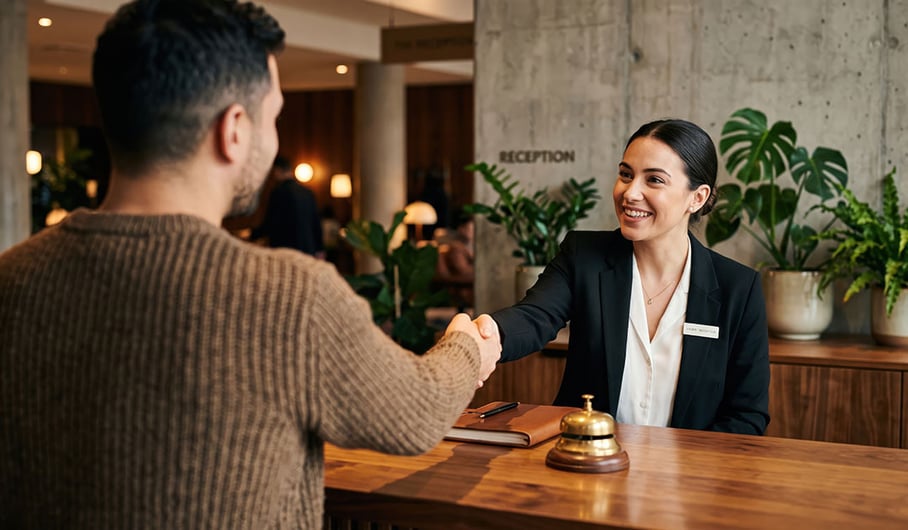
The measure of a hotel’s success lies in the guest’s overall experience. This sequence of interactions, which begins long before check-in and continues past the departure, is known as the "guest journey". Guest journey mapping is a strategic approach that enables hospitality businesses to visualise and understand the sequence of touchpoints a guest experiences with their brand. By meticulously analysing these stages, hotel managers can identify "pain points" where friction, confusion or dissatisfaction might occur and transform them into opportunities for service recovery or delight.
FAQs
- 1. Why is guest journey mapping considered a strategic necessity in modern hospitality?
- 2. How can data analytics help in mapping the guest journey?
- 3. What role does organisational culture play in the guest journey?
- 4. How does an Advanced Diploma in Hospitality Management help with guest experience?
- 5. Is guest journey mapping relevant for small, independent lodges or only large chains?
Read more
This article is part of a larger series on the tourism and hospitality industry. To read more about this topic, you can click on any of the following article links.
- The Art and Science of Tourism Hospitality Management Systems
- South African Tourism: Trends, Growth and Career Opportunities
- Tourism Grading Council of South Africa: Star Grading Explained
- SATSA and Tourism Standards | South Africa's Sustainable Tourism
- FEDHASA: South Africa's Hospitality Leadership and Association
- SANParks and Conservation Tourism: South Africa's Wildlife Tourism
- Hospitality Tech in South Africa | Digital Trends and Smart Hotels
- Hotel PMS: Features, Benefits and Best Practices
- Mews PMS: Features, Benefits and Hotel Management Software
- Cloudbeds Hotel PMS | Simplifying Operations with Cloud Technology
- Front Office & Hotel Operations | Guest Services and Best Practices
- Contactless Digital Check-In | Enhance Guest Experience
- Housekeeping and Room Management Systems for Hotel Operations
- Hotel Maintenance and Preventive Management Systems
- Building Management Systems and Smart Hotel Facility Management
- Hotel Energy Management and Smart Solutions
- Guest Journey Mapping: Improving the Hotel Experience
- Hotel CRM: Guide to Customer Relationship Management
- Medallia | Transforming Hospitality Through Customer Experience
- Qualtrics Hospitality | Experience Management for Hotels and Resorts
- Hotel Loyalty Programmes | Guest Retention and Hospitality Rewards
- AI Personalisation in Hospitality | Enhancing Guest Experience
- Service Recovery Models in Hospitality | Guest Satisfaction
- Ritz-Carlton Service Recovery: Excellence in Hospitality
- Service Profit Chain: Boosting Hospitality Loyalty and Growth
- Hospitality Employee Experience | Retention and Service Excellence
- Hospitality Training and Staff Development Solutions
- Hospitality Education Pathways | Courses and Career Guide
- Ubuntu Hospitality Philosophy: African Excellence in Guest Service
- Four Seasons Golden Rule | Personalised Service and Experiences
- GSTC Hotel Criteria: Sustainable Standards and Best Practices
- ISO 14001 Hospitality | Environmental Management for Hotels
- Fair Trade Tourism | Ethical and Sustainable Tourism Guide
- HCMI Carbon Measurement | Hotel Carbon Footprint
- Green Globe Certification: Hospitality and Tourism Standards
- Regenerative Tourism | Restoring Communities, Nature and Travel
- Circular Hospitality | Circular Economy in Hotels and Tourism
- Hotel Carbon Tax | Compliance and Costs
Understanding the Guest Journey Lifecycle
To effectively manage the guest experience, one must first break the journey down into its smaller parts. While every property is unique, the lifecycle generally follows these distinct stages:
- Awareness and Inspiration: The potential guest begins by dreaming of a holiday, scrolling through social media or browsing travel platforms. Their perception of the brand is often formed by digital content, reviews and reputation.
- Research and Consideration: Once a destination or property is selected, the guest evaluates options. They compare amenities, prices and location.
- Booking: This is the first important transaction. The ease of the booking process sets the tone for the entire stay, whether direct via the hotel’s website or through an Online Travel Agency (OTA).
- Pre-arrival: Often overlooked, this phase involves communication, such as confirmation emails, transportation arrangements or special request forms. It is an opportunity to build anticipation and remove anxiety.
- Arrival and Check-in: This is where expectations become reality. The efficiency of this interaction, the warmth of the welcome and the smoothness of the transition from traveller to guest can set the tone for the entire stay.
- On-property Experience: This includes room comfort, dining, concierge services and overall facility maintenance.
- Check-out: The final interaction that shapes the lasting impression of the stay.
- Post-stay: The retention phase. Follow-up emails, hotel loyalty programme engagement and feedback requests improve the likelihood that the guest returns.
Data-Driven Decision Making
Relying on intuition is no longer sufficient. Successful hospitality organisations use hotel customer relationship management (CRM) systems and data analytics to track guest behaviour throughout these stages.
For professionals looking to formalise their approach to guest management, the Tshwane University of Technology (TUT) offers online programmes that provide the necessary analytical frameworks. For example, the Postgraduate Diploma in Hospitality Management includes a module on Digital Hospitality Marketing, which focuses on using software and online tools to communicate effectively with the target market and gain a competitive advantage. By understanding how to interpret data, hospitality leaders can make informed decisions about service delivery, rather than relying on guesswork.
Strategies for Improving the Journey
To enhance the guest experience, hospitality businesses should consider the following steps:
- Identify Touchpoints: Audit every single point where a guest interacts with your brand, from the first Google search result to the final survey email sent after they have returned home.
- Implement Feedback Loops: Actively seek guest feedback at every stage using tools like Qualtrics Hospitality. Use this to refine services. The Research Methodology components found in both the Advanced Diploma in Hospitality Management and the Postgraduate Diploma in Hospitality Management equip professionals with the scientific skills needed to collect and analyse this data effectively.
- Personalise the Experience: Use CRM data and AI personalisation to remember guest preferences, such as room types, dietary requirements or special occasions.
- Foster Sustainability: Modern guests are increasingly conscious of their environmental footprint. Demonstrating commitment to sustainability, as explored in the Environmental Impact of the Hospitality Industry module in the Postgraduate Diploma in Hospitality Management, can significantly enhance a guest's perception of your brand.
- Empower Staff: A guest journey is only as good as the team executing it. Providing staff with the tools and training to make autonomous decisions, a strategy famously used by The Ritz-Carlton, helps them resolve issues on the spot.
By systematically applying these strategies, hospitality professionals can transform a standard stay into a memorable experience that encourages repeat bookings and drives positive brand advocacy.
FAQs
1. Why is guest journey mapping a strategic necessity in modern hospitality?
Guest journey mapping allows businesses to move beyond broad service goals and focus on the granular experiences that drive satisfaction. By identifying every touchpoint, an organisation can systematically improve quality, reduce friction and build stronger emotional connections with guests, which is essential for retaining customers in a highly competitive market.
2. How can data analytics help in mapping the guest journey?
Data analytics through platforms like Medallia provide objective evidence of guest behaviour. By analysing trends in booking platforms, website interactions, and guest feedback, managers can identify exactly where guests are dropping off or experiencing frustration. Modules such as Digital Hospitality Marketing in the Postgraduate Diploma in Hospitality Management help professionals master the tools needed to leverage this data for improved decision-making.
3. What role does organisational culture play in the guest journey?
The guest experience is often defined by the staff they interact with. An organisational culture that promotes service excellence and empathy ensures that employees naturally prioritise guest needs. Programme modules like Organisational Behaviour (Postgraduate Diploma in Hospitality Management) and Service Leadership (Master of Tourism and Hospitality Leadership) specifically address how to cultivate a workplace environment that results in superior guest outcomes.
4. How does an Advanced Diploma in Hospitality Management help with guest experience?
The Advanced Diploma in Hospitality Management provides foundational operational skills. It covers topics such as Service Excellence and Accommodation Management IV, which equip students to manage the guest experience by applying core hospitality principles and environmental considerations, ensuring service delivery remains consistent and high-quality.
5. Is guest journey mapping relevant for small, independent lodges or only large chains?
Guest journey mapping is scalable and arguably even more vital for independent properties. While they may lack the massive digital infrastructure of global chains, small lodges can use journey mapping to offer highly personalised experiences that large hotels cannot replicate. Leaders can use the strategic frameworks taught in the Master of Tourism and Hospitality Leadership to create unique value propositions that differentiate their properties in the global market.