0800 233 725 (toll-free)
 enquiries@online.tut.ac.za
%201.png?width=371&height=115&name=logo%20(1)%201.png)
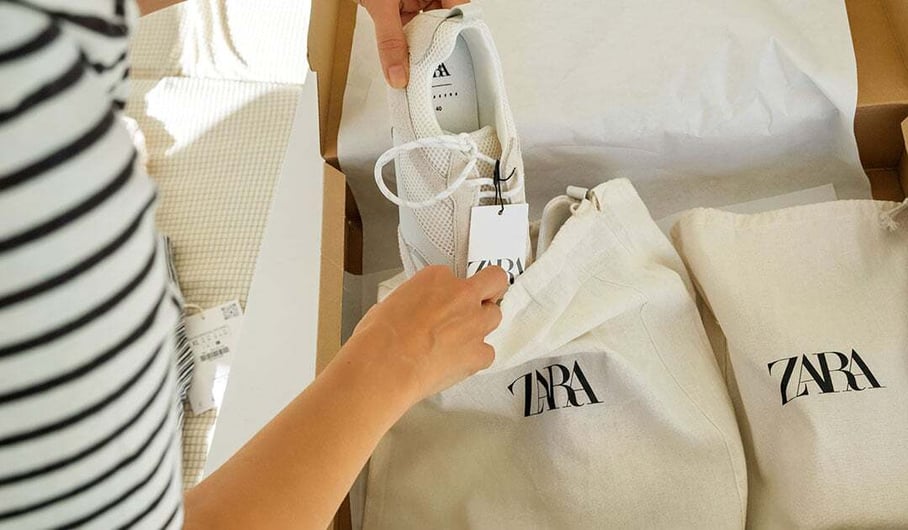
In the traditional fashion world, collections are designed nearly a year in advance. Zara, the flagship brand of the Inditex group, threw that rulebook out the window. The company's ability to take a design from a sketch to a global storefront in as little as two weeks is legendary. This "fast fashion" model was not built on guesswork; it was built on a revolutionary Inventory Management System (IMS) designed for one thing: speed.
Zara has revolutionised the retail industry with its ability to move designs from concept to store shelves in record time. This case study explores how Zara's IMS integrates real-time data, predictive analytics, and agile logistics to optimise inventory, minimise waste, and deliver exactly what customers want when they want it.
Read more
This article is part of our 23-part series about inventory management. You can also get a good overview on the importance of IMS in retail management in our longer-format article "Retail Business Management: Inventory Management Systems Reinvented".
- Foundations: The Big Picture
- Core Components and Techniques
- Supply Chain Integration and Optimisation
- Data Standards and Formats
- Case Studies: Systems in Action
- Integration Challenges
- The Future of Inventory Management
This series relates to retail business management. If you would like to study to enter this field, then please have a look at the Diploma in Retail Business Management page.
A Demand-Driven Model
Unlike its competitors, Zara doesn't place huge bets on what will be fashionable next season. Instead, it has perfected a model of testing and reacting to the market in real-time. The company produces a vast array of styles but in intentionally small, limited batches. These initial collections are not a forecast; they are a live market test.
The IMS is the central nervous system that enables this. It is designed to capture and analyse customer responses with incredible speed, identifying winning trends and cutting losses on unpopular items almost instantly.
The Real-Time Information Feedback Loop
Zara's data collection goes far beyond simple sales figures. The IMS creates a rich, two-way conversation between the stores and the central design headquarters in Spain.
- Quantitative Data: Every transaction from every till in every store across the globe is fed into the central IMS in real-time. The system knows exactly which sizes, colours, and styles are selling, and where.
- Qualitative Data: This is Zara's secret weapon. Store managers are equipped with handheld devices and are trained to be fashion detectives. They provide daily reports to headquarters on what customers are requesting, which items are being tried on but not purchased, and general feedback on trends they observe on the street.
This constant stream of hard sales data and soft human intelligence gives Zara's designers an unparalleled, up-to-the-minute understanding of what the market truly desires.
Agile Production and Logistics
The insights gathered by the IMS are worthless without the ability to act on them quickly. Zara's entire production and logistics network is engineered for speed.
- Localised Sourcing: While many rivals outsource 100% of their production to Asia to cut costs, Zara produces more than half of its fashion items in Spain, Portugal, Turkey, and Morocco. These "proximity" sourcing locations have much shorter lead times, allowing for rapid production of new batches.
- Small-Batch Replenishment: When the IMS identifies a hit product, the design team can make minor adjustments and place a new order. Because the factories are nearby, this new stock can be produced and delivered to stores worldwide in under two weeks. This is the engine behind Zara's fast fashion inventory turnover. This unique model, which values speed-to-market over the lowest possible per-unit cost, is a powerful example of an agile inventory strategy.
- Centralised Distribution: Every single garment, regardless of its manufacturing location, passes through one of two highly automated central distribution centres in Spain. From here, new shipments are sent out to every store, twice a week, like clockwork. This ensures a constant flow of new items, encouraging customers to visit frequently.
Conclusion: The Ultimate Lesson in Responsiveness
Zara's success demonstrates that an Inventory Management System can be more than just a tool for tracking stock; it can be a company's core strategic asset. By building a system focused on listening to the customer, and aligning it with a flexible and responsive production network, Zara minimises the biggest risk in fashion: making clothes that nobody wants to buy. They sell a very high percentage of their products at full price, not because they are the cheapest, but because their IMS enables them to give customers exactly what they want, precisely when they want it.
The principles behind Zara's success, namely agile supply chains, data-driven decision-making, and innovative inventory management, are central to modern retail. For those inspired to master these strategies and lead the next wave of retail innovation, TUT's online Diploma in Retail Business Management is designed to equip you with the skills you need.
FAQs
1. What is "fast fashion" and how does Zara's model exemplify it?
"Fast fashion" refers to a business model that rapidly moves designs from concept to store shelves. Zara exemplifies this by taking a design from a sketch to a global storefront in as little as two weeks, a stark contrast to the traditional fashion world, where collections are designed nearly a year in advance.
2. How does Zara's Inventory Management System (IMS) work?
Zara's IMS is a sophisticated system that creates a real-time information feedback loop between its stores and its central design headquarters in Spain. It collects both quantitative data, such as real-time sales figures from every store, and qualitative data, which includes daily reports from store managers about customer requests and local trends. This constant stream of data allows Zara's designers to have an up-to-the-minute understanding of market desires.
3. What is the significance of Zara's production and logistics strategy?
Zara's production and logistics network is engineered for speed. More than half of its fashion items are produced in proximity to its headquarters, in locations such as Spain, Portugal, Turkey, and Morocco, which enables the rapid production of new batches. When a product is identified as a hit, a new order can be produced and delivered to stores worldwide in under two weeks. Additionally, all garments pass through one of two highly automated central distribution centres in Spain, ensuring a constant flow of new items to every store twice a week.
4. How does Zara test the market for new styles?
Instead of making large bets on future fashion trends, Zara produces a wide variety of styles in intentionally small, limited batches to test the market in real-time. These initial collections serve as a live market test, and the IMS is used to quickly analyse customer responses to identify popular trends and discontinue unpopular items almost instantly.
5. What is the ultimate lesson from Zara's success?
The key takeaway from Zara's success is that an Inventory Management System can be a company's core strategic asset, not just a tool for tracking stock. By focusing on customer feedback and aligning it with a flexible and responsive production network, Zara minimises the risk of producing clothes that nobody wants to buy. This allows them to sell a high percentage of their products at full price, giving customers exactly what they want, when they want it.