0800 233 725 (toll-free)
 enquiries@online.tut.ac.za
%201.png?width=371&height=115&name=logo%20(1)%201.png)

Entrepreneurship is widely recognised as a primary driver of job creation, innovation and social development. According to the Global Entrepreneurship Monitor (GEM) research, small and medium enterprises play a pivotal role in the local economy, yet many aspiring business leaders face the challenge of formalising their skills to scale effectively.
The online Postgraduate Diploma in Entrepreneurship offered by the Tshwane University of Technology (TUT) provides a pathway for professionals to bridge this gap. Designed for those who are already balancing careers or personal ventures, this fully online qualification focuses on the strategic and operational competencies required to lead in a rapidly changing economy.
Before applying, however, prospective students must ensure they meet the entry requirements. Understanding these criteria is the first step toward aligning your academic background with the programme’s advanced curriculum.
Navigating the entry requirements
The Postgraduate Diploma in Entrepreneurship is designed as a postgraduate-level qualification. As such, the admission criteria are structured to ensure that all entrants possess the necessary foundational knowledge to engage with the advanced content.
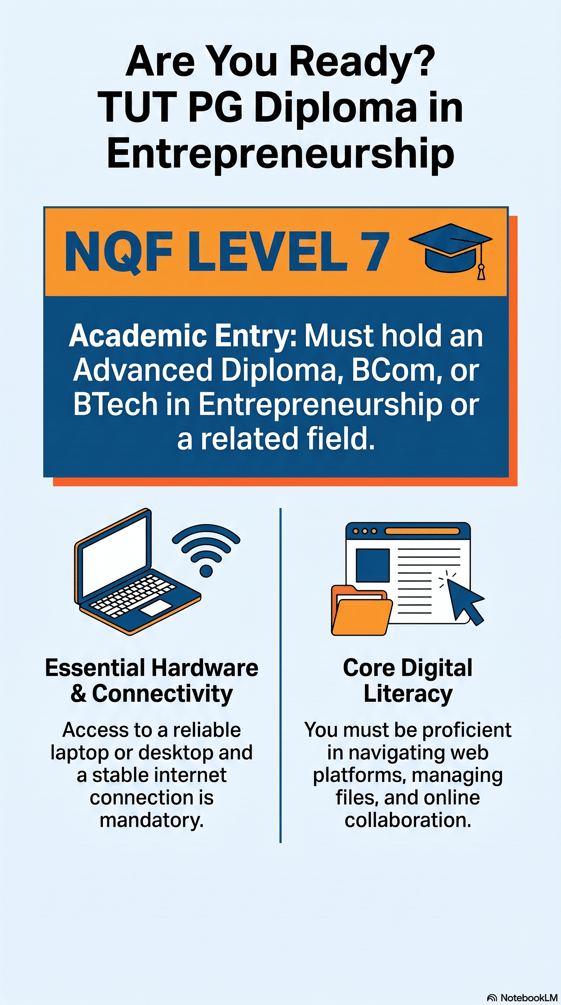
To be considered for admission, applicants must hold one of the following NQF Level 7 qualifications:
- An Advanced Diploma in Entrepreneurship
- A related Advanced Diploma
- A BCom or BTech degree in Entrepreneurship
Because this is a digital-first programme, technical preparation is as crucial as academic history. You should also ensure you are equipped with the following before you commence your studies:
- A reliable laptop or desktop computer.
- A stable and consistent internet connection, essential for participating in the Learning Management System (LMS) and engaging with course materials.
- Computer literacy to navigate the digital learning environment, collaborate with peers online and submit assessments via the LMS.
Why the entry requirements matter
The programme is carefully curated to balance academic rigour with workplace relevance. The curriculum covers essential areas such as Business Incubation Management, Business Turnaround Management, and Strategic Entrepreneurship. By maintaining specific entry standards, TUT ensures that enrolled students are prepared for the depth of research methodology and critical analysis required at the postgraduate level.
Whether you are a startup founder looking to professionalise your operations or a corporate professional aiming to pivot into management consulting or innovation roles, meeting these requirements confirms you have the necessary academic foundation to succeed. This qualification is more than just a certificate; it is an opportunity to contribute to local economic transformation by applying structured, research-based solutions to real-world business challenges.
You can take the next important step in your career and begin your application process by filling in the request information form.
Learn more about the programme
If you would like to find out more about the Postgraduate Diploma in Entrepreneurship programme, you can also read the following articles:
- What can you do with an online Postgrad Diploma in Entrepreneurship?
- How to apply for an online Postgraduate Diploma in Entrepreneurship?
- How studying TUT's Postgrad Diploma in Entrepreneurship online works
FAQs
1. What qualification level is required to apply for this programme?
To apply for the Postgraduate Diploma in Entrepreneurship, you must hold a qualification at NQF Level 7. This is a postgraduate diploma, and therefore applicants must have already completed an undergraduate qualification, such as an Advanced Diploma, a BTech or a BCom degree.
2. Can I apply if my previous degree is not specifically in entrepreneurship?
Yes, you may be eligible to apply if you hold a qualification in a related field at NQF Level 7. If you have an undergraduate degree in a business or management-related discipline, you may meet the criteria. It is advisable to review your academic transcripts to ensure your previous studies provide the appropriate foundation for postgraduate work in entrepreneurship.
3. Is this programme suitable for someone working full-time?
The programme is specifically designed with the working professional in mind. The fully online delivery model and the use of a digital Learning Management System (LMS) provide the flexibility required for those balancing work, family and study. It allows you to engage with the course material and assessments without the need for physical, on-campus attendance.
4. What computer skills do I need for this online qualification?
Because the programme is conducted entirely online, you must be proficient in using a computer for academic purposes. This includes navigating web-based platforms, managing files, participating in online communication and completing digital assessments. A stable internet connection and access to a reliable computer are fundamental requirements for your success in the programme.
5. How long will it take to complete the programme?
The programme is structured to be completed over a period of two years. This duration allows students to engage deeply with the eight required modules while maintaining their professional and personal commitments.